


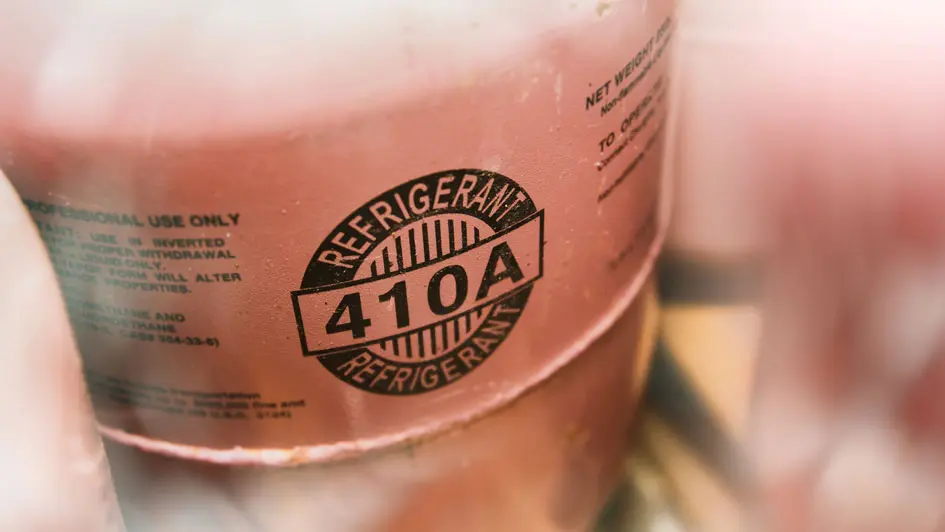
If you’ve looked into getting a new air conditioner in Libertyville, Mundelein, or Round Lake recently, you probably saw a refrigerant on your quote that sounds unfamiliar. It might say R-454B, “Puron Advance,” or “A2L.” All of these refer to the same update. This guide breaks down the refrigerant changes in simple terms: what happened in 2025, how the new refrigerants stack up, what you need to know about safety, and if you have to replace your current HVAC system. Check it out before you sign anything so you know exactly what you’re paying for.
What Changed for New AC Systems in 2025?
For approximately 15 years, the refrigerant R-410A was the go-to refrigerant for air conditioning systems in the USA. However, as of January 1, 2025, this is a thing of the past! The American Innovation and Manufacturing (AIM) Act now makes it mandatory under the EPA that new residential and light commercial air conditioners and heat pumps utilize a refrigerant with a global warming potential (GWP) of 700 or less. With R-410A being at 2,088, manufacturers have been halted from building the new R-410A systems for homes.
The AIM Act also cuts the supply of HFC refrigerants in steps. By 2036, HFC production and imports must drop to 15% of the historic baseline, and the next big step-down arrives in 2029. Those refrigerant regulations are why the HVAC industry moved quickly. Carrier, Trane, and Lennox, the three brands we install most, now build their new systems around refrigerants like R-454B.
The transition of businesses is also a very similar journey. Rooftop units and other commercial HVAC systems have distinct Federal timelines, but the trend is identical to that in homes: lower-GWP refrigerants in both commercial and residential equipment.
What Is R-454B, and Why Is It the New Refrigerant on Your Quote?
This is the gas most major brands chose to replace the old standard in central air. R-454B is a blend of two refrigerants, one of them a newer compound with very little climate impact. Its GWP is 465, roughly 78% lower compared to R-410A. Carrier sells it under the name Puron Advance, so if your Carrier quote says that, it means the same gas.
Why this one? It runs at similar pressures to R-410A, so manufacturers could update their designs without starting from scratch. It was adopted by many HVAC manufacturers for ducted split systems. That’s the setup in most Lake County homes: a furnace or air handler inside, plus a condenser or heat pump outside. Today, most new ducted systems use R-454B instead of R-410A.
How Does R-410A vs R-454B Compare?
Here’s a quick way to compare R-454B vs R-410A, with a third option included for reference:
| R-410A | R-454B | R-32 | |
|---|---|---|---|
| GWP | 2,088 | 465 | 675 |
| Safety class | A1 (nonflammable) | A2L (low flammability) | A2L (low flammability) |
| Makeup | Blend | Blend | Single component |
| Allowed in new home systems? | Only pre-2025 stock | Yes | Yes |
| Common brands | Older equipment, all brands | Carrier, Trane, Lennox | Daikin, Goodman, many mini-splits |
R-410A is also made up of a blend of 2 older HFC gases, and R-454B & R-410A are both going to do the same job in your home: they suck the heat out of the inside & blow it outside. You won’t really even notice a difference in how comfortable you are.
A properly installed R-454B system will actually cool your house in the same way your old one did – it’ll just be a bit better for the planet.
The real differences between R-410A & R-454B are the environmental impact & how it is handled. Lower GWP (Global Warming Potential) means if some of the gas does leak out over the life of the system, it won’t do as much damage. Also, the A2L rating means that the tech will need to use specific tools, follow newer safety guidelines & put in extra safety measures on the equipment.
As for whether or not its any more efficient to run, its mostly going to be about the quality of the equipment you get. Be sure to check the SEER2 rating on your quote to see how efficient it is.
Where Does R-32 Fit? R-410A vs R-32 vs R-454B
The other main option is R-32. R-32 is a single-component refrigerant with a GWP of 675, just under the federal limit. Daikin, Goodman, and many ductless mini-split brands use it. Because it’s one chemical instead of a mix, a technician can top off a system without worrying about the blend separating. That’s a small service advantage.
So should you choose R-32 or R-454B? For most homeowners, the refrigerant shouldn’t decide the purchase. R-32 and R-454B are both legal, both carry the same safety class, and both will be serviceable for years. Manufacturers report that the single-component option can deliver slightly better energy efficiency than R-410A, but sizing, ductwork, and installation quality affect your bills far more. Pick the contractor and the equipment first. The refrigerant type follows from that choice.
Is an A2L Refrigerant Safe in Your Home?
This is the question we get asked all the time. R-454B is classed as A2L, which basically means it’s low toxicity and not very combustible at all. “Mildly flammable” sounds a bit worrisome, but the thing is, these refrigerants are really hard to set alight, and if they do catch, they burn pretty slowly – so you’d need a whole load of this gas in the air plus a good, strong flame to get them really going.
New A2L equipment has to meet UL 60335-2-40 – that’s a safety standard designed specifically with this type of gas in mind. Loads of newer indoor units now come with a leak detection sensor fitted near the coil. If the sensor picks up on any kind of refrigerant leak, the system basically starts the blower up to thin out the gas and then switches off anything that could spark – and it does all this long before the concentration gets high enough that it becomes a fire risk.
Picture a furnace squashed into a tiny utility room in someone’s basement in Grayslake. With an older coil, a slow leak would probably go unnoticed until the house just stopped cooling – the instruction manual never told you to look for it. With a new system, however, the sensor spots the leak and kicks in straight away.
R-410A Is Being Phased Down: Do You Have to Replace Your R-410A System?
No. This is a phase-down, not a ban. If your existing R-410A system works, keep running it. Technicians can still legally service, repair, and recharge older R-410A equipment, and reclaimed refrigerant will help keep supply available.
The catch is cost. The supply of new R-410A shrinks every few years under the AIM Act, and industry groups have warned that service prices for refrigerants like R-410A could climb. Here’s a common service-call scenario: a 15-year-old system needs a coil repair and a full recharge. At that point, it makes sense to price a replacement before you put serious money into an aging unit.
Can an R-410A System Be Converted to R-454B?
No, and be wary of anyone who offers. You can’t put R-454B into an R-410A system. Older equipment isn’t built or certified for the new class of refrigerant. It lacks the leak sensors, spark-resistant parts, and labeling the safety rules require. Adding the wrong refrigerant can damage the compressor and void your warranty.
If you want the newer gas, you need new equipment. The outdoor unit and the indoor coil must both be rated for the same refrigerant, so you can’t pair a new condenser with your old coil. Your technician may be able to reuse the copper line set if it’s the right size and in good condition, which can lower the installed price.
Should You Buy Leftover R-410A Equipment or New HVAC Equipment?
Here’s a twist many homeowners don’t expect. In 2026, EPA refrigerant rules changed again: the agency removed the deadline for installing systems whose parts were built or imported before the cutoff. Some suppliers still have that older stock, and contractors may offer it at a discount. It’s legal to install.
Before you take the deal, weigh three points:
- Future repairs: Any refrigerant repair will rely on a gas with a shrinking supply.
- Shelf age: The unit has sat in storage for two years or more, so confirm when the warranty starts.
- Timing: You’ll likely replace it again right when the old refrigerant is hardest to find.
For Lake County homeowners planning to stay 10 years or more, a system on R-454B or another low-GWP refrigerant is the safer bet. Installing new R-410A gear makes the most sense when the budget is tight and you expect to move within a few years.
What Should a 2027 Quote Show?
A good quote names the refrigerant clearly and spells out what comes with it. Look for these items:
- Refrigerant name: The quote should state which gas the system uses. If it lists R-410A, ask whether it’s pre-2025 inventory.
- Matched model numbers: List the outdoor unit and indoor coil as a matched pair.
- Efficiency ratings: SEER2 for cooling, plus HSPF2 for heating on heat pump systems.
- Leak detection: Include the sensor and any required wiring.
- Line set plan: Reused or replaced, and why.
- Warranty terms: Parts and labor coverage, plus registration steps.
Lake County brings humid summers and cold winters, so many residential HVAC setups pair a heat pump with a gas furnace. Ask how each option affects comfort and efficiency across both seasons. Whether you need a new air conditioner or heat pump, the HVAC professionals at Optimized Air can walk you through each line of the quote and help you choose the right refrigerant and system for your HVAC needs.
Key Takeaways
- Since January 2025, new home cooling systems must use refrigerant with a GWP below 700.
- R-454B (GWP 465) and R-32 (GWP 675) have replaced the old standard (GWP 2,088) in new home equipment.
- “Puron Advance” on a Carrier quote is Carrier’s brand name for the 465-rated blend.
- The new refrigerants are mildly flammable, so new equipment includes leak sensors and meets UL 60335-2-40.
- You don’t need to replace a working system on the old refrigerant. It can still be serviced.
- An older system can’t be switched to the new gas. A different gas means a new matched system.
- Leftover pre-2025 equipment is legal to install, but expect higher repair costs later.
- Judge a quote by sizing, efficiency ratings, and installer quality more than by the refrigerant name.