


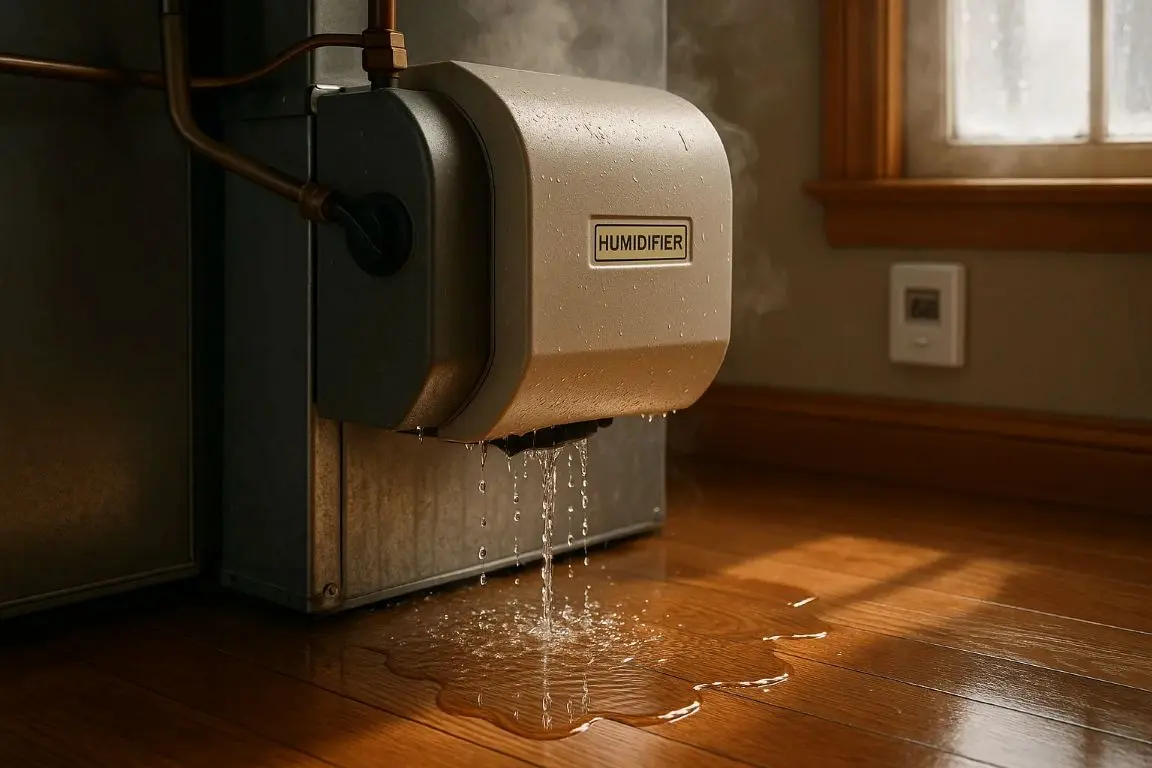
Finding water pooling around your furnace can be scary. It instantly raises concerns of expensive repairs and water damage. However, before you panic, check your furnace’s humidifier. This add-on component is frequently the hidden culprit behind basement puddles, and the good news is that many causes are simple fixes you can handle yourself.
Here is why your humidifier might be leaking and how to stop the drip.
Why Is My Humidifier Leaking From the Bottom?
If your furnace humidifier is leaking from the bottom, water is getting into the unit faster than it can drain out. Here are the most common culprits:
- Clogged water panel. Mineral buildup keeps the pad from absorbing water, so it runs straight down and past the drain tray.
- Blocked or kinked drain line. Excess water backs up, overflows the tray, and spills out the bottom of the unit.
- Stuck solenoid valve. Water keeps flowing even when the furnace is off, which overwhelms the drain.
- Cracked housing or loose drain fitting. If the pad and drain line check out, look for damage along the bottom of the unit.
Where to start: Check the water panel first. It’s the most common cause and the easiest fix. We walk through each problem and how to fix it below.
The “Sponge” is Clogged
Most bypass humidifiers use a water panel (also known as an evaporator pad or filter). Think of this as a large sponge that holds water for warm air to pass through. Over time, minerals from your water supply – like calcium and lime – build up on this panel.
When the panel becomes caked with white, crusty sediment, it can no longer absorb water effectively. Instead of soaking in, the water runs down the surface, misses the drain tray, and leaks out of the bottom of the unit.
The Fix: Check your owner’s manual. Most manufacturers recommend replacing this panel once a year. If you have “hard” water, you may need to change it twice per heating season.
The Drain Line is Blocked
Your humidifier relies on gravity. Excess water that isn’t evaporated is supposed to flow down a plastic drain tube to a floor drain or condensate pump.
If this tube gets kinked, clogged with algae (“sludge”), or filled with mineral scale, the water backs up. Once the drain tray overflows, that water has nowhere to go but onto your floor or inside your furnace cabinet.
The Fix: Inspect the drain tube visually. If it looks moldy, stiff with calcium, or cracked, it is best to replace the tubing entirely. Ensure the line creates a continuous downward slope without any loops or “hills” where water can get trapped.
The Solenoid Valve is Stuck
The solenoid valve acts like an electric faucet. It opens to let water into the humidifier when your furnace runs and closes when the heating cycle stops.
Debris, such as dirt or small particles from your pipes, can sometimes get lodged in the valve seat. This prevents the valve from closing completely. If this happens, water flows continuously—even when the furnace is off—eventually overwhelming the drain system and causing leaks.
The Fix: Listen to your furnace when it is off. If you still hear water hissing or flowing through the humidifier, the valve is likely stuck open and needs to be replaced.
Actionable Takeaways
Prevent leaks and protect your home with these maintenance steps:
Replace the Water Panel Annually: Make this a habit at the start of every heating season. A fresh panel prevents leaks and improves the air quality in your home.
Test the Drain Line: Pour a cup of water into the humidifier drain tray to ensure it flows quickly to the floor drain. If it backs up, clear the blockage immediately using water or a blast of compressed air.
Check the Water Pressure: If you recently adjusted your home’s water pressure, ensure it is under 125 psi. Pressure that is too high can force water past the solenoid seals.
Monitor Your Water Bill: A sudden, unexplained spike in water usage often indicates a stuck solenoid valve wasting hundreds of gallons a month.
If you have replaced the pad and cleared the line but the leak persists, the issue may involve the water supply line or housing cracks. In these cases, you can contact an HVAC professional, like Optimized Air, to ensure the repair is done safely.
Ready to Optimize Your HVAC System?
At Optimized Air Heating & Cooling, our certified technicians can analyze your specific home setup and recommend the ideal HVAC operation strategy for your unique needs. We’ll help you balance energy efficiency with comfort and air quality.
Call us: (224) 338-9591
Email: [email protected]
Mention code “SMARTFAN” for 15% off your next maintenance service!